 730 N Catalina Ave Redondo Beach, CA 90277
 310-807-1660

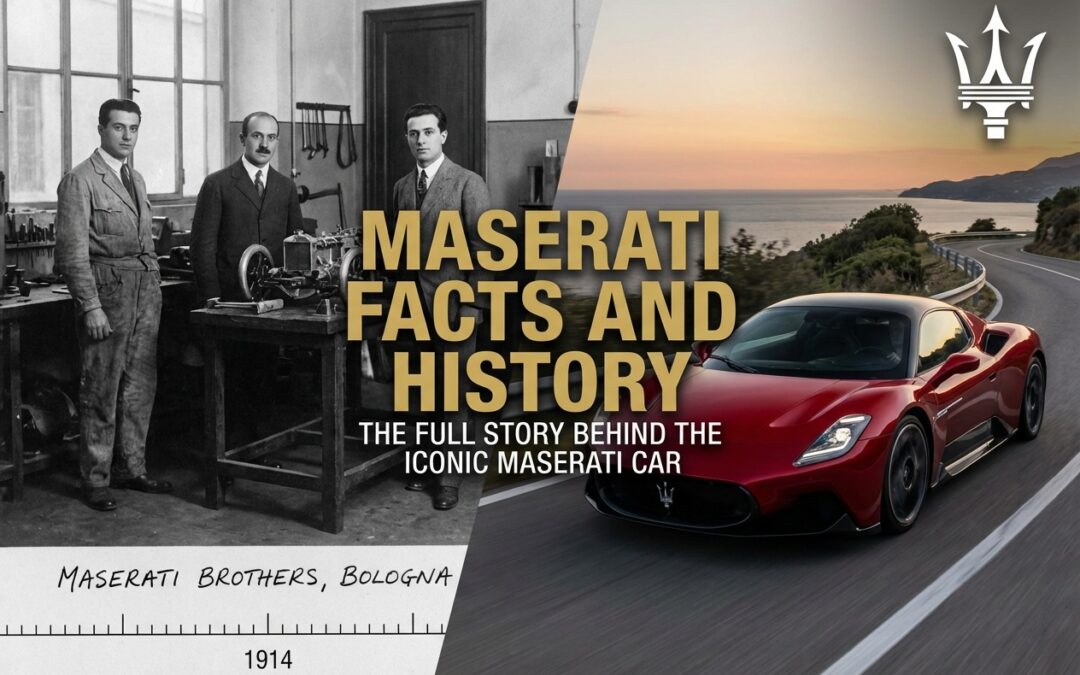
Few names in the automotive world carry as much weight as Maserati. Born in Bologna, Italy over a century ago, this luxury car manufacturer has built a legacy around speed, style, and Italian craftsmanship. Whether you already own a Maserati or you’re just curious about the brand, this guide covers everything from the rich history of Maserati to practical ownership questions like cost, insurance, and fuel. Let’s get into it.
What Is the History of Maserati?
Maserati’s history starts on December 1, 1914, when Alfieri Maserati founded the company in Bologna, Italy. Originally called Officine Alfieri Maserati, the business wasn’t building cars right away. The early years focused on developing spark plugs and modifying other manufacturers’ vehicles for racing.
The Maserati brothers were central to the story from the beginning. Alfieri, along with his brothers Bindo, Ettore, and Ernesto, all had a deep connection to automobiles. One of the Maserati brothers, Carlo, was the eldest and the first to work with engines, though he passed away in 1910 before the company was officially founded. Mario Maserati, the sixth brother, was an artist rather than an engineer. He is the one who designed the famous trident logo that still defines the Maserati brand today.
When Diatto, the car manufacturer the brothers had been building race cars for, suspended production in 1926, the brothers founded the Maserati marque under their own name. Their first Maserati race car was the Tipo 26, and it made its debut at the 1926 Targa Florio. Alfieri himself drove it and won his class. That single victory set the tone for decades of motorsport success.
How Did the Maserati Brand Evolve from Bologna to Modena?
Alfieri Maserati died in 1932 from complications related to a racing injury. His death was a blow, but Ernesto Maserati and the remaining brothers kept the company running. They continued producing successful racing cars throughout the 1930s.
In 1937, the Maserati brothers sold their shares in the company to the Orsi family, led by industrialist Adolfo Orsi. The deal included a clause: the brothers would stay on as engineers for ten years. In 1940, the Orsi family moved the company headquarters from Bologna to their hometown of Modena, where Maserati remains headquartered to this day.
Even after the sale, the Maserati name and engineering DNA stayed intact. Racing continued at a high level. In back-to-back wins in 1939 and 1940, the Maserati 8CTF won the Indianapolis 500. That made Maserati the only Italian manufacturer to ever win at Indy. It’s a record that still stands.
What Car Logo Is Like a Trishul?
If you’ve ever spotted a car emblem that looks like a trident or trishul, you were looking at a Maserati. The Maserati logo is a three-pronged trident, and its origin story is deeply rooted in Bologna. The design was inspired by the Fountain of Neptune in Bologna’s Piazza Maggiore. Neptune, the Roman god of the sea, holds a trident in the famous statue, and that image became the Maserati emblem.
The trident logo was designed by Mario Maserati at the suggestion of a family friend, Marquis Diego de Sterlich. It was chosen because Neptune represents strength and vigor, qualities that fit a high-performance sports car company perfectly. The famous trident logo has been a symbol of the Maserati brand for over a hundred years, and it remains one of the most recognizable badges in the automotive industry.
What Is a Fun Fact About Maserati?
Here’s one that surprises most people: the legendary Formula One driver Juan Manuel Fangio won the 1957 World Championship driving a Maserati 250F. Fangio is widely considered one of the greatest race car drivers in history, and that championship remains one of Maserati’s proudest racing achievements.
Another fun fact? The Maserati Quattroporte, which translates to “four doors” in Italian, debuted in 1963 as one of the fastest sedans in the world. It was even used as an official state car by the Italian government. The idea of a four-door luxury car with genuine race car DNA was radical at the time. Today, the Maserati Quattroporte is still known as the maserati vehicle that blends sedan practicality with sports car performance.
One more: the Maserati Birdcage, officially the Tipo 61, earned its nickname because of its incredibly intricate tubular steel chassis. It looked like a birdcage when stripped down. That race car became one of the most iconic Maserati models of the 1960s and remains a collector’s dream.
What Is the Maserati Known For?
Maserati is known for blending luxury with raw performance. Unlike some luxury brands that prioritize comfort above all else, every Maserati car carries legitimate motorsport heritage. The company spent its first several decades building nothing but race cars. That racing DNA shows up in everything from the exhaust note to the suspension tuning.
The brand is also known for its distinctive engine sound. Driving a Maserati is an experience that engages all the senses. The twin-turbo V6 and V8 engines produce a growl that’s become a signature of the brand. Maserati continued refining this sound even as the industry shifted toward quieter, more efficient powertrains.
Key models like the Maserati Ghibli, GranTurismo, and Quattroporte have all helped define what the brand stands for: Italian design, hand-crafted interiors, and high-performance engineering. The Maserati 3500 GT, introduced in the late 1950s, was the first Maserati designed primarily as a road car rather than a race car. It marked a pivotal shift for the company. The 3500 GT Spyder variant added open-top driving to the mix. Over 2,200 units were built, and the model’s success was critical to Maserati’s survival after the company withdrew from factory racing.
What Is So Special About a Maserati?
What makes Maserati special is exclusivity. Maserati produces far fewer cars than competitors like BMW or Mercedes. Annual production typically sits well under 40,000 units. That means when you see a Maserati on the road, it stands out. You’re not driving the same luxury sports car as everyone else in your zip code.
Each Maserati is assembled in Modena, Italy. The interiors are hand-stitched with premium leather, and many components are still finished by skilled artisans. The GranTurismo, for example, represents the gran turismo philosophy perfectly: a car built for long-distance comfort without sacrificing speed. The new Maserati GranTurismo, revived for 2024, offers both a twin-turbo V6 and a fully electric Folgore powertrain, signaling the brand’s future direction.
Then there’s the Maserati MC20, the brand’s mid-engine supercar. With 621 horsepower from its Nettuno 3.0L twin-turbo V6, it accelerates from 0-60 mph in 2.9 seconds. The MC20 proved that Maserati returned to the supercar arena with serious intent. Its predecessor in spirit, the iconic Maserati MC12, was a limited-production homologation special that dominated GT racing in the mid-2000s.
Is Maserati Still Owned by Ferrari?
No. Maserati is not owned by Ferrari. The two brands have a complicated history, though. Ferrari held a stake in Maserati starting in 1997, and the partnership led to Ferrari-built engines appearing in several Maserati models. Maserati was acquired by Fiat in 1993. Later, Fiat transferred control to Ferrari as a subsidiary.
In 2005, Maserati became a standalone brand again under the Fiat umbrella. When Fiat merged with Chrysler to form Fiat Chrysler Automobiles (FCA), Maserati came along. Then in 2021, FCA merged with PSA Group to create Stellantis. Today, Maserati is owned by Stellantis, the multinational automotive group that also owns brands like Alfa Romeo, Dodge, and Jeep. So while Maserati and Ferrari once shared an owner, they’ve been separate entities for years. Maserati was previously owned by Fiat through various corporate structures, but the Ferrari connection ended long ago.
How Much Does a Maserati Cost?
The cost of a new Maserati depends on the model. The Maserati lineup currently starts with the Grecale SUV, which has a base MSRP around $78,000 to $86,000 depending on the model year and trim. The Maserati Levante, a larger SUV, starts slightly higher. On the sedan side, the Maserati Ghibli (now discontinued for new production) and the Maserati Quattroporte have historically ranged from the mid-$70,000s to well over $100,000.
If you’re looking at sports cars, expect to spend significantly more. The Maserati GranTurismo starts at roughly $161,000, while the Maserati MC20 commands around $215,000 and up. A fully loaded Maserati automobile with custom options from the Fuoriserie personalization program can push prices even higher. The Maserati lineup offers a range of price points, but every model carries that unmistakable Italian luxury car pedigree.
What Kind of Gas Does a Maserati Take?
Every gas-powered Maserati requires premium unleaded gasoline. This applies across the entire lineup, from the Grecale SUV to the MC20 supercar. Premium fuel has a higher octane rating (91 or above), which prevents engine knock in the high-compression, turbocharged engines Maserati uses.
Using regular gas in a Maserati is not recommended. The engines are precision-tuned for premium fuel, and lower-octane gas can lead to reduced performance, poor fuel economy, and potential long-term engine damage. If you’re budgeting for Maserati ownership, factor in the higher cost of premium fuel. The Maserati Ghibli gets roughly 20 mpg combined, while the MC20 comes in around 18 mpg combined. The electric Folgore models, of course, skip the gas station entirely.
Is Insurance High on a Maserati?
Yes. Insurance on a Maserati is significantly higher than the national average. According to multiple industry sources, the average annual cost to insure a Maserati ranges from roughly $4,800 to $5,800 per year, depending on the model. For context, the national average for car insurance sits around $1,300 to $1,600 annually. That makes Maserati insurance roughly three to four times higher than average.
Several factors drive up Maserati insurance costs. The high purchase price means expensive payouts if the vehicle is totaled. Repair costs are steep because parts often ship from Italy and require specialized technicians. Performance capabilities also factor in, since insurers consider high-performance vehicles riskier. The Maserati Quattroporte, in particular, has been ranked as one of the most expensive cars to insure in the United States. If you’re considering a Maserati, get insurance quotes before you buy. Your age, location, driving record, and credit score will all play a role in your final premium.
How Fast Will a Maserati Go?
The top speed depends on the model. The Maserati MC20 leads the pack with a top speed of 202 mph, making it a genuine supercar. The GranTurismo Trofeo tops out around 199 mph. The Ghibli Trofeo reached about 203 mph in its final iterations, making it one of the fastest sedans ever produced. Even the Grecale Trofeo, an SUV, hits 177 mph.
Acceleration is equally impressive. The MC20 hits 60 mph in 2.9 seconds. The GranTurismo Trofeo does it in about 3.5 seconds. These are serious numbers that put Maserati models in competition with established supercar makers like Ferrari and Lamborghini. Even the entry-level Grecale Modena delivers 325 horsepower, enough to make any daily drive feel engaging.
Why Is Maserati So Popular?
Maserati’s popularity comes down to a combination of heritage, exclusivity, and emotional appeal. The brand has over 110 years of history, with roots in competitive racing that most luxury brands simply can’t match. The Alfieri brothers built the company on a passion for speed, and that passion has never left.
The return to the US market in the early 2000s with the new Quattroporte and the Maserati Ghibli sedan brought the brand to a wider audience. The Maserati Levante SUV further expanded reach by offering something for buyers who wanted Italian luxury in a more practical package. Maserati launched the Grecale as a more accessible entry point, and the MC20 anchored the top of the lineup as a halo car.
Pop culture plays a role too. Maserati has appeared in countless films, songs, and TV shows. The combination of a storied name, exotic styling, and that unmistakable exhaust note makes Maserati aspirational in a way that few brands can replicate. For people who want something that feels genuinely different from the typical German luxury sedan, Maserati delivers.
From the Tipo 26 to the MC20: Why Maserati Still Matters
Maserati’s story is one of resilience. The company survived the death of its founder in 1932, a sale to the Orsi family in 1937, withdrawal from factory racing in 1957, and multiple changes in corporate ownership. Through it all, Maserati began each new chapter with the same commitment to performance and design.
The A6 series carried the brand through the post-war years. The 3200 GT revived interest in the late 1990s. The Alfieri concept car previewed a bold design direction. And the Maserati MC20, with its in-house Nettuno engine, proved Maserati could still engineer a world-class powertrain from scratch. Founded in Bologna over a century ago, the company has never stopped evolving. Whether you’re drawn to Maserati for the history, the performance, or the pure style of a high-performance Italian luxury sports car, this is a brand that has earned its place.
At Trident Motorsports, we know these cars inside and out. If you own a Maserati or you’re thinking about buying one, we’re here to help you get the most out of the experience.
Key Maserati Facts to Remember
- Maserati started in 1914, founded in Bologna by Alfieri Maserati. The first Maserati race car, the Tipo 26, debuted in 1926.
- The trident logo was designed by Mario Maserati, inspired by the Fountain of Neptune in Piazza Maggiore, Bologna.
- The Maserati brothers sold the company to the Orsi family in 1937. Headquarters moved from Bologna to Modena in 1940.
- The Maserati 8CTF won the Indianapolis 500 in 1939 and 1940, a record for Italian manufacturers.
- Juan Manuel Fangio won the 1957 Formula One World Championship in a Maserati 250F.
- Maserati is currently owned by Stellantis, not Ferrari. It was previously owned by Fiat Chrysler Automobiles.
- New Maserati prices range from around $78,000 (Grecale) to over $215,000 (MC20).
- All gas-powered Maserati models require premium unleaded fuel.
- Maserati insurance averages $4,800 to $5,800 per year, well above the national average.
- The MC20 reaches a top speed of 202 mph and hits 60 mph in 2.9 seconds.